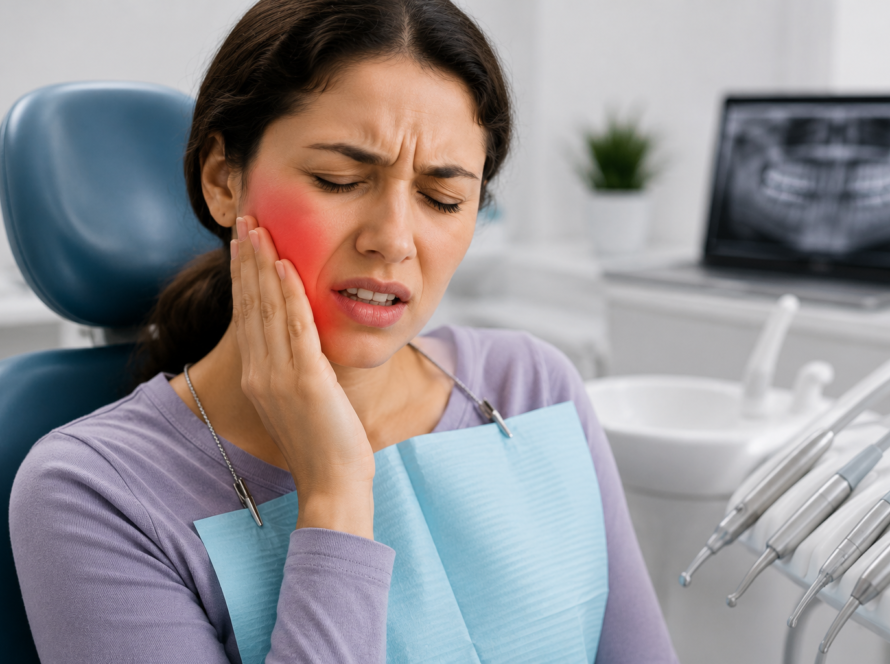
Most people walk into a dental clinic worried about a cavity or a chipped tooth. Nobody ever considers oral cancer until it has progressed. That’s the real danger. Oral cancer doesn’t usually announce itself with pain. It starts quietly, often as something so small and painless that it gets brushed off as “just an ulcer” or “probably nothing.”
At Dr. Johny’s Dental Clinic in Palakkad, we see this pattern more often than we’d like. The risk of oral cancer is much higher in Kerala than in many other regions of the country, particularly in areas where chewing tobacco, paan, and areca nut (betel nut) use are still widespread. Daily tobacco chewers had a several-fold increased risk of oral cavity disease, according to research from a long-running Kerala-based cohort study. Daily tobacco chewers had a several-fold increased risk of oral cavity cancer compared to non-users, and the risk increased with the frequency and duration of the habit, according to research from a long-running Kerala-based cohort study.
Fortunately, one of the body’s most noticeable cancers is oral cancer. If you know what to look for and don’t ignore it, early detection is actually possible because it occurs in an area that your dentist can see and examine directly.
These are five red flags that you should never ignore.
1. A Mouth Ulcer or Sore That Won’t Heal
Everyone occasionally develops mouth ulcers as a result of biting their cheek, consuming hot food, or experiencing general stress. An ulcer typically heals in seven to ten days.
A sore, ulcer, or ulcer-like patch on the tongue, inner cheek, gums, lips, or floor of the mouth that doesn’t go away after two weeks is the warning sign. Early on, these sores are frequently painless, which is precisely why they are ignored. They don’t always hurt, don’t come and go, and don’t react to common home remedies like canker sores do.
Our recommendation is to have a mouth ulcer examined if it hasn’t healed after two weeks. Don’t hold off until it hurts.
2. White or Red Patches Inside the Mouth
During a dental examination, you might hear the terms “erythroplakia” (red patches) and “leukoplakia” (white patches). These are patches on the tongue, gums, inner cheeks, or roof of the mouth that don’t wipe away and don’t have an obvious cause like recent injury.
White areas frequently feel a little thicker or rougher.
Although red areas appear smoother, they bleed more easily when touched.
Not all patches are cancerous; many are brought on by tobacco and areca nut use, poorly fitting dentures, or persistent irritation from rough teeth. However, because they may indicate early precancerous changes, red and mixed red-white patches in particular are regarded as higher-risk and require a professional evaluation.
3. A Lump, Thickening, or Hard Area in the Mouth or Neck
Occasionally run your tongue along the base of your tongue or the inside of your cheek. It’s important to notice any new lump, thickened patch of tissue, or hard spot that wasn’t there before, especially if it persists for a few weeks.
This also applies to the neck. A firm lump or swelling beneath the jaw or along the neck may be an indication that lymph nodes are responding to something, which may be an infection or a sign that requires more research. Painless lumps are not always “safe” lumps; in its earliest, most treatable stage, oral cancer frequently manifests as painless lumps.
4. Persistent Numbness, Pain, or a Burning Sensation
People often do not associate oral health with unexplained numbness in the lips, tongue, or other parts of the mouth, which is similar to a mild anesthetic effect that doesn’t go away. Persistent pain or a burning sensation in the mouth or throat that doesn’t have a clear cause (like a new filling or a hot-food burn) also falls into this category, particularly when it lasts for weeks rather than days.
Even if it seems insignificant, it’s important to bring up any persistent tenderness, pain, or numbness you experience at your next dental appointment.
5. Difficulty Moving the Jaw/Tongue, Speaking, Chewing, or Swallowing
As the changes worsen, they may begin to interfere with basic functions, such as food feeling like it “catches” on one side, increasing difficulty swallowing, a change in your voice, or stiffness that makes it difficult to open your mouth completely or move your tongue and jaw normally.
Oral cancer is frequently diagnosed late because these symptoms are easily mistaken for other conditions like a sore throat, exhaustion, or aging.
Why Kerala Residents Face a Higher Risk
Roughly one-third of all cases of oral cancer worldwide are thought to be caused by the use of areca nuts and smokeless tobacco; South Asia, including India, bears a disproportionate amount of this burden. Within India, oral habits like paan, gutka, and khaini chewing vary significantly by state, and Kerala has been the site of some of the most detailed long-term research on tobacco chewing and oral cancer risk in Indian women and men alike.
This does not imply that everyone who chews tobacco or paan will get oral cancer, but it does indicate that there is a real, cumulative risk that is directly related to the frequency and duration of the habit. Combined with alcohol use, poor oral hygiene, and in some cases HPV infection, the risk compounds further.
Frequent screening is the one habit that transforms everything.
Oral cancer differs from many other types of cancer in that it is visible and treatable. During a routine examination, a qualified dentist can identify early tissue changes, frequently before you’ve even noticed anything out of the ordinary. For this reason, even if nothing seems wrong, we advise having a dental examination at least once every six months. One of the easiest things you can do for early detection is an oral cancer screening, which only takes a few extra minutes as part of a regular exam.
Why choose Palakkad’s Dr. Johny’s Dental Clinic?
Here are some reasons why patients in Palakkad and Kerala trust us with their oral health if you’ve noticed any of the previously mentioned symptoms or just haven’t had a dental examination in a while:
- 25 years of experience in dentistry. Having treated patients in Palakkad for 25 years, Dr. Johny Dental Clinic has the experience to identify what is normal and what requires further examination.
- More than 10,000 smiles were improved through general, cosmetic, and restorative dentistry—not just one-time screenings but continuous, comprehensive treatment.
- Patients specifically mention that our staff takes the time to clearly explain conditions, treatment, and prevention rather than hurrying through appointments, earning us a 5-star Google rating.
A multispecialty clinic under one roof, offering everything from routine examinations and treatment for periodontal (gum) disease to oral and maxillofacial surgery, so you won’t be referred elsewhere if something does require additional assessment or care.
Genuine, patient-first care. As one of our patients put it, what stood out most was the clinic’s honest guidance over pushing unnecessary treatment.
Conclusion
Although oral cancer is one of the more treatable and preventable cancers when detected early, it is still terrifying to consider. A two-minute screening during your routine dental visit is crucial because the five-year survival rate for oral cancer decreases significantly between early- and late-stage diagnoses.
Don’t wait for pain to tell you something’s wrong. If you’ve noticed a sore that won’t heal, a patch that won’t go away, or any of the signs above, book a screening with us today.